PSP // acquiring signal
§ PIEAS Society for Physics  ·  Est. 2021  ·  Islamabad

Reading the
universe by its
signals.

A student-driven physics community at PIEAS — seminars, workshops, research and competition, where classroom theory meets real inquiry.

Meet the society
λ 656.3 nm · H-α
33.6844° N · 73.0479° E
SIGNAL // ACQUIRED
§ 01 Identity PSP / About

A society built around curiosity, rigor and the people who chase it.

Est. 2021
PIEAS · Islamabad

The PIEAS Society for Physics (PSP) is a student-driven organization dedicated to fostering scientific curiosity and academic excellence. Through research seminars, hands-on workshops, guest lectures, and academic competitions, we cultivate critical thinking and bridge the gap between classroom learning and real-world research. Our community of 120+ active members works together to push the boundaries of knowledge and contribute meaningfully to the scientific landscape of Pakistan and beyond.

“

Research seminars · Workshops · Guest lectures · Academic competitions

50+
Active Members
70+
Events Organized
30+
Guest Speakers
Since 2021
Founded
§ 03 Events Programme / Archive

Events & categories — the calendar of a working society.

Inertia 2026
Featured flagship

Inertia

Physics is not just a collection of formulas and theories — it is a journey of curiosity, exploration, and discovery. For years, the PIEAS Society for Physics has carried forward the spirit of scientific curiosity through INERTIA — a platform where students come together to experience the wonders of physics beyond the conventional classroom. Over the years, INERTIA has evolved into a celebration of ideas, experiments, and the fascinating principles that shape our understanding of the universe. Through engaging activities and thought-provoking experiences, it continues to inspire minds to look at physics not as a challenge, but as an adventure waiting to be explored. With every edition, INERTIA brings a fresh perspective and a reminder that the beauty of physics lies not only in its laws, but in the questions that lead us to discover them.

Explore the Inertia archive
No upcoming events right now
New workshops, competitions and opportunities will be posted here — check back soon.
Mathletics
Category

Mathletics

Where mathematical rigor meets competitive spirit.

Hackathons
Category

Hackathons

Pakistan's first national quantum computing hackathon — three days of frontier problem-solving.

Talks & Seminars
Category

Talks & Seminars

Guest lectures from physicists, researchers and alumni.

ROMES Seminar Series
Category

ROMES Seminar Series

World-class physicists on the frontiers of modern physics.

Workshops
Category

Workshops

Quantum science, applied math, astronomy and 2D materials — hands-on sessions.

Integration Bee
Category

Integration Bee

A celebration of speed, precision, and the art of integration.

Odyssey Circle Talks
Category

Odyssey Circle Talks

A student-led series tracing physics from antiquity to the quantum age.

World Space Week
Category

World Space Week

Rockets, telescopes and hands-on space science outreach.

Alumni Talks
Category

Alumni Talks

Alumni share scholarships, study-abroad and internship journeys.

Back

Inertia Flagship

The event that marks the beginning of every PSP journey—explore the legacy of INERTIA.

Inertia 2024: Beyond Horizon

Inertia 2024: Beyond Horizon

December 3, 2024PIEAS Campus

INERTIA 2024 continued the tradition of the PIEAS Society for Physics in inspiring curiosity and fostering a deeper appreciation for science through an engaging blend of education and entertainment. Designed as the society's flagship introductory event, it welcomed students to explore the fascinating world of physics beyond textbooks and classrooms. The event featured an insightful keynote address by Dr. Mansoor Ur Rehman, a distinguished theoretical physicist whose research spans cosmology, particle physics, inflationary models, and gravitational waves. His talk encouraged participants to explore the frontiers of modern physics and highlighted the significance of scientific research in understanding the universe. Adding to the experience were a variety of interactive mind games and activities, including a "Guess the Scientist" challenge that tested participants' knowledge of influential figures in physics. The audience was also taken on a captivating visual journey through the history of the cosmos, with high-quality presentations illustrating the evolution of the universe—from its earliest moments following the Big Bang to the distant future and the eventual death of the Sun. By combining scientific storytelling, engaging activities, and inspiring discussions, INERTIA 2024 successfully showcased the beauty, wonder, and relevance of physics to a new generation of learners.

Highlights

  • Keynote Speaker: Dr. Mansoor Ur Rehman — Physics Professor at Quaid-i-Azam University (QAU)
FlagshipIntroductory EventKeynoteMind GamesCosmology2024
Inertia 2022

Inertia 2022: Beyond Horizon

November 3, 2022PIEAS Campus

'INERTIA ’22' was a celebration of curiosity, innovation, and the fascinating world of physics, organized by the PIEAS Society for Physics. Continuing the legacy of INERTIA, the event brought together students and physics enthusiasts to explore the beauty of scientific concepts beyond the boundaries of a traditional classroom. Through interactive activities, demonstrations, and engaging challenges, INERTIA ’22 aimed to make physics more accessible, exciting, and meaningful. The event provided participants with an opportunity to experience the wonders of physics firsthand and develop a deeper appreciation for the principles that govern our universe. INERTIA ’22 reflected the vision of the PIEAS Society for Physics: to inspire curiosity, encourage exploration, and show that physics is not just a subject to study, but a world to discover.

Highlights

  • Chief Guest: Dr. Muhammad Aslam Baig--Head Laser Plasma Physics, NCP
Quantum MechanicsAstrophysicsQuantum2022
Inertia 2021

Inertia 2021: Beyond Horizon

December 7, 2021PIEAS Auditorium

INERTIA ’; marked the inaugural event of the PIEAS Society for Physics (PSP), introducing the society to the student community and laying the foundation for what would become one of its flagship initiatives. Designed to spark curiosity and foster a deeper appreciation for physics, the event provided an engaging platform for students to explore science beyond the classroom. The program featured interactive physics-based games, captivating demonstrations, educational videos, and an inspiring address by the chief guest, offering participants a glimpse into the vision, mission, and objectives of PSP. More than just an introductory event, INERTIA ’21 reflected the society’s commitment to cultivating scientific inquiry, innovation, and collaborative learning among aspiring physicists. By bringing together students with a shared passion for discovery, INERTIA ’21 successfully established the identity of the PIEAS Society for Physics and set the stage for the growth of the INERTIA series in the years to come.

Highlights

    Chief Guest: Dr. Kashif Sabeeh
An era of PhysicsAstrophysics2021

Mathletics & Competitions

Where mathematical rigor meets competitive spirit. Our dedicated space for pure and applied math events.

Mathletics25

Mathletics: Autumn 2025

December 8-11, 2025C-block

Mathletics 2025 was the flagship mathematics competition of the Autumn Session, jointly organized by the PIEAS Society for Physics (PSP) and ASME. Designed to challenge analytical thinking and problem-solving abilities, the competition brought together students from across PIEAS in a series of rigorous and engaging rounds. The event featured questions spanning aptitude, integration, differentiation, trigonometry, and other core mathematical concepts. Beginning with an open qualifying round, participants advanced through successive elimination stages, culminating in an intense final showdown among the top competitors. Beyond the competition itself, Mathletics 2025 celebrated logical reasoning, perseverance, and mathematical excellence, providing students with an opportunity to showcase their skills while fostering a spirit of healthy academic competition.

Highlights

  • Winners:
    • Hooriya Zahid
    • Saniya Rahim Abbasi
    • Zain Ali
  • Aptitude TestIntegrationDifferentiationTrigonometry
Mathletics25

Mathletics: Spring 2025

April 23-27, 2025Khirad-Hall A-Block

Mathletics– Spring 2025 was a dynamic mathematics competition organized by the PIEAS Society for Physics, reimagining the traditional Integration Bee into a comprehensive contest of analytical thinking and problem-solving. Designed to challenge participants across multiple areas of mathematics, the event covered Integration, Differentiation, Algebra, Series and Sequences, Basic Ordinary Differential Equations (ODEs), and Geometry. The competition unfolded through four progressive rounds, beginning with a written qualifying test, followed by a rapid-fire challenge, on-board problem solving, and culminating in the signature Integration Round. Each stage tested not only mathematical proficiency but also speed, precision, and composure under pressure. By bringing together students from diverse academic backgrounds, Mathletics – Spring 2025 fostered a spirit of intellectual competition while celebrating the elegance and versatility of mathematics.

IntegrationDifferentiationAlgebraSeries and SequencesBasic Ordinary Differential Equations (ODEs)Geometry

Hackathons

Where Pakistan's brightest minds race the clock to build the future — three days, real-world problems, quantum-scale ambition.

Quantum Computing Hackathon Pakistan 2026

Quantum Computing Hackathon Pakistan 2026

February 6-8, 2026National Centre for Physics, QAU — Islamabad

Quantum Computing Hackathon Pakistan 2026 was the first national quantum computing hackathon in Pakistan — a historic milestone in the country's journey toward quantum technologies. Held from February 6–8, 2026 at the National Centre for Physics (NCP), Islamabad, the event was jointly organized by PIEAS, NILOP, and NCP, with support from the Open Quantum Institute (OQI). It brought together students, researchers, and innovators to tackle real-world challenges using quantum computing while fostering collaboration across academia and research. The hackathon attracted over 950 applications from across the country, from which 42 finalists — forming 17 teams — were selected to compete. Over three days, participants engaged in intensive problem-solving, mentorship sessions, and discussions with distinguished scientists from institutions including PIEAS, LUMS, CERN, and international collaborators. Aligned with the United Nations Sustainable Development Goals (SDGs), the event laid the foundation for Pakistan's emerging quantum ecosystem and showcased the nation's growing commitment to frontier scientific research and innovation.

Highlights

  • Applications: 950+ nationwide
  • Finalists: 42 participants across 17 teams
  • Organizers: PIEAS, NILOP & NCP — supported by the Open Quantum Institute (OQI)
  • Mentors from: PIEAS, LUMS, CERN and international collaborators
HackathonQuantum ComputingNational FirstNCPOQISDGs2026

Talks & Seminars

Guest lectures and invited talks — physicists, researchers and alumni sharing frontier ideas with the society.

Quantum Gravity and the Structure of the Universe — Hassaan Saleem

Quantum Gravity and the Structure of the Universe

February 20, 2026 · 10:00 AM – 12:00 PMTeleconference Hall, A Block (Online)

Part of PSP's Let's Talk Physics series, this online interactive lecture featured Hassaan Saleem — a theoretical physicist and PhD student at the University at Albany (SUNY) specializing in String Theory and Conformal Field Theory. The session explored the cutting-edge theories that seek to explain the universe, from String Theory to M-Theory, and how they attempt to unify physics' most fundamental laws — while encouraging students to question assumptions and think independently.

Highlights

  • Speaker: Hassaan Saleem (Theoretical Physicist, University at Albany, SUNY)
  • Series: Let's Talk Physics
  • Format: Online interactive lecture
Let's Talk PhysicsQuantum GravityString TheoryCosmology2026
Introduction to Quantum Computing and Quantum for AI — Kamila Zaman

Introduction to Quantum Computing and Quantum for AI

September 17, 2025 · 1:30 PM – 2:45 PMOdeum, A Block, PIEAS

A Let's Talk Physics guest session with Ms Kamila Zaman — a researcher in machine learning, optimization, and information theory using quantum methods, and founder of the AI technology company SYLERK. Drawing on research initiatives with New York University, NYU Abu Dhabi, and the Quantum Qatar Initiative, her talk highlighted the power of combining physics with innovation to open new horizons for AI and the future of science.

Highlights

  • Speaker: Ms Kamila Zaman (Founder, SYLERK)
  • Focus: Quantum computing, AI & information theory
  • Series: Let's Talk Physics
Let's Talk PhysicsQuantum ComputingAIInformation Theory2025
From Classical Computing to Quantum Computing — Dr. Shahid Qamar

From Classical Computing to Quantum Computing: A Paradigm Shift

September 26, 2024 · 2:00 PMLyceum Hall, PIEAS

An informative talk by renowned scientist Dr. Shahid Qamar on the transition from classical to quantum computing. As classical systems approach their fundamental physical limits, the session explored how quantum mechanics offers a groundbreaking new approach to computation — and what that paradigm shift means for the future of technology.

Highlights

  • Speaker: Dr. Shahid Qamar
  • Theme: Classical → quantum computing paradigm shift
SeminarQuantum ComputingClassical Computing2024
The 2024 Nobel Prize in Physics — Dr. Nasir Majeed Mirza

The 2024 Nobel Prize in Physics

2024PIEAS

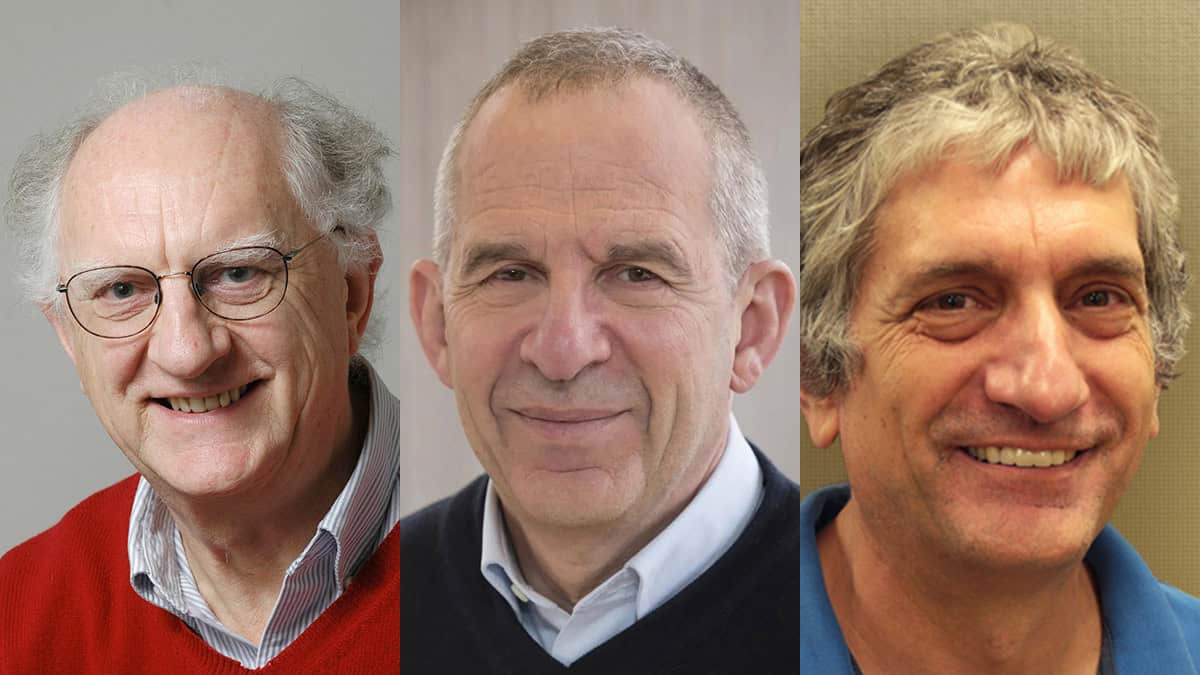
A discussion led by Dr. Nasir Majeed Mirza (Ex-Rector, PIEAS) unpacking the 2024 Nobel Prize in Physics, awarded to John J. Hopfield and Geoffrey Hinton for foundational breakthroughs in machine learning with artificial neural networks. The session examined how their work bridges physics and artificial intelligence — with applications from image recognition to materials science — and engaged the debate over awarding a physics prize to AI research.

Highlights

  • Speaker: Dr. Nasir Majeed Mirza (Ex-Rector, PIEAS)
  • Topic: 2024 Nobel Prize — Hopfield & Hinton, neural networks
SeminarNobel PrizeNeural NetworksAI2024
Lecture on Gravity — Dr. Nasir Majeed Mirza

Lecture on Gravity

May 2024 · 1:45 PM – 3:30 PMLyceum, PIEAS

A Let's Talk Physics lecture by Dr. Nasir Majeed Mirza (Ex-Rector, PIEAS) exploring the physics of gravity — from its classical foundations to the questions that continue to drive modern research.

Highlights

  • Speaker: Dr. Nasir Majeed Mirza (Ex-Rector, PIEAS)
  • Series: Let's Talk Physics
Let's Talk PhysicsGravityLecture2024
Syed Ali Hussain — Scholarship Hunting Program

Syed Ali Hussain — Scholarship Hunting Program

Career & Scholarship SessionPIEAS

A session with Syed Ali Hussain — a former colleague of a 2023 Nobel laureate — on the Scholarship Hunting Program, helping physics graduates discover funding opportunities tailored to their aspirations and chart a path toward a successful research career.

Highlights

  • Speaker: Syed Ali Hussain
  • Focus: Scholarship hunting for physics graduates
AlumniScholarshipsCareersGuidance

ROMES Seminar Series

A distinguished seminar series bringing world-class physicists to PIEAS for deep dives into the frontiers of modern physics.

Can We Reverse Decoherence? — Prof. Muhammad Suhail Zubairy

Can We Reverse Decoherence?

December 16, 2025 · 1:45 PM – 3:15 PMInam-Ur-Rehman Auditorium, PIEAS

PSP hosted Prof. Muhammad Suhail Zubairy of the Department of Physics and Astronomy at Texas A&M University for a seminar titled "Can We Reverse Decoherence?" A pioneer in quantum optics and quantum information, Prof. Zubairy co-authored the renowned textbook Quantum Optics with Marlan O. Scully, alongside Quantum Mechanics for Beginners and A Mysterious Universe. The seminar offered an engaging exploration into one of quantum theory's deepest puzzles — whether decoherence can ever truly be reversed.

Highlights

  • Speaker: Prof. Muhammad Suhail Zubairy (Texas A&M University)
  • Recognition: Ranked 24th worldwide in Quantum Optics (Lifetime, ScholarGPS 2024) — top 0.05% globally
  • Author of the foundational textbook "Quantum Optics" (with M. O. Scully)
ROMESSeminarQuantum OpticsDecoherenceQuantum Information2025

Workshops

Hands-on sessions in quantum science, applied mathematics, astronomy and 2D materials — where theory meets the bench.

One Day Workshop on Quantum Science & Technology (QST-2023)

One Day Workshop on Quantum Science & Technology (QST-2023)

August 21, 2023PIEAS Lyceum, Islamabad

The Centre for Mathematical Sciences (CMS) and the Department of Physics & Applied Mathematics (DPAM) hosted a one-day Quantum Science & Technology Workshop, bringing together national and international speakers to explore the frontiers of quantum research. The programme featured invited talks from researchers across leading institutions in Pakistan, China, and Germany, offering students and faculty a concentrated look at the rapidly evolving quantum landscape.

Highlights

  • Invited speakers from NUST, NILOP-C, COMSATS, Hubei University (China), Zhejiang Normal University (China), and Fraunhofer ILT / LMU (Germany)
  • Organized by CMS & DPAM, PIEAS
Quantum ScienceWorkshopCMSDPAMInternational2023
Student-Built Mechanics Lab Equipment

Student-Built Mechanics Lab Equipment

Summer 2023DPAM, PIEAS

Over the summer break, three BS Physics (2020–24) students chose to spend their holidays on campus building two original mechanics lab instruments — now set to be introduced into the first-semester lab course. The first uses a photodiode-equipped inclined plane, a 3D-printed cart, and a rolling metallic ball to measure the gravitational constant through geometry and trigonometry. The second determines the coefficients of static and kinetic friction by finely adjusting an inclined surface using an Arduino board and stepper motor. Both setups also demonstrate key ideas from classical and Lagrangian mechanics. In recognition, the DPAM faculty awarded the students certificates to encourage similar initiative.

Highlights

  • Students: Muhammad Haroon, Hareem Fatima, Amina Farooq
  • Instructor: Dr. Afshan Irshad
  • Outcome: Instruments to be added to the first-semester lab course
Student ProjectMechanicsInstrumentationArduinoDPAM2023
IWAM-2022 — International Workshop on Applied Mathematics

IWAM-2022 — International Workshop on Applied Mathematics

November 28-29, 2022Lyceum Hall, Block A, PIEAS

A two-day international workshop organized by the Centre for Mathematical Sciences (CMS) and the Department of Physics & Applied Mathematics (DPAM), in collaboration with COMSATS University Islamabad (Islamabad & Lahore campuses). The event gathered renowned national and international speakers from institutions across Pakistan, Spain, and Italy for two days of lectures spanning the breadth of applied mathematics — an opportunity for students and researchers alike to engage with leading mathematicians.

Highlights

  • International keynotes: Prof. José Manuel Conde Alonso (Universidad Autónoma de Madrid, Spain), Prof. Daan Van De Weem (SISSA, Italy)
  • In collaboration with COMSATS University, Islamabad & Lahore campuses
Applied MathematicsInternational WorkshopCMSDPAMCOMSATS2022
What's Beyond The Sky — Stargazing 2022

What's Beyond The Sky — Stargazing 2022

October 24-25, 2022PIEAS, Islamabad

Presented by PSP with guest speaker Dr. Shoaib Ahmad — recipient of the President's Pride of Performance Award (2002) and Senior Associate at the National Centre for Physics. The session opened on 24 October with a short introduction to Galilean and Newtonian telescopes, followed by a live demonstration using Dr. Ahmad's own hand-made instruments. On 25 October 2022, attendees gathered at PIEAS to safely observe the partial solar eclipse (15:43–17:22) through specially filtered telescopes — a rare chance to witness the Moon veiling the Sun firsthand.

Highlights

  • Guest speaker: Dr. Shoaib Ahmad (Pride of Performance, 2002 · NCP)
  • Live partial solar eclipse observation, 25 Oct 2022 (15:43–17:22)
  • Telescope demonstration with hand-made Galilean & Newtonian instruments
AstronomyStargazingSolar EclipseTelescopesOutreach2022
2D Materials & Quantum Effect Devices

2D Materials & Quantum Effect Devices

July 19-21, 2022PIEAS, Islamabad

A multidisciplinary workshop devoted to the fundamental and applied aspects of 2D materials — such as graphene, MoS₂, WS₂, and MoSe₂ — and quantum effect devices. It brought together field leaders, young researchers, and students to discuss the growth and characterization of 2D materials, their electrical and optical properties, quantum effect devices, related theory and simulation, and micro/nanofabrication.

Highlights

  • Topics: growth & characterization, electrical/optical properties, quantum effect devices, theory & simulation, micro/nanofabrication
  • Open to professionals and students across disciplines
2D MaterialsGrapheneQuantum DevicesNanofabricationWorkshop2022
Quantum Mechanics: Myths & Realities — Dr. Sajid Qamar

Quantum Mechanics: Myths & Realities — Dr. Sajid Qamar

April 15, 2022Lyceum, A Block, PIEAS

Held for International Quantum Day, this workshop session featured Dr. Sajid Qamar — Dean of the Faculty of Sciences at COMSATS, former Chairman and Head of the Department of Physics, and former Associate Director of the Centre for Quantum Physics at CIIT. With over 90 publications and research stints at the Max Planck Institute for Nuclear Physics (Germany), Texas A&M University (USA), and Hong Kong Baptist University, Dr. Qamar led a detailed exploration of the vast field of quantum physics and its significance today.

Highlights

  • Speaker: Dr. Sajid Qamar (Dean, Faculty of Sciences, COMSATS)
  • Occasion: International Quantum Day
  • Theme: Quantum Mechanics — Myths & Realities
Quantum MechanicsWorkshopQuantum DayCOMSATS2022
Data Science with Python — Dr. Aftab Rafique

Data Science with Python — Dr. Aftab Rafique

January 11-13, 2022ACRE Lab, DNE Building, PIEAS

A three-day hands-on workshop led by Dr. Aftab Rafique, Head of the Department of Physics & Applied Mathematics. The programme moved from an introduction to Python and its libraries through scientific computing with NumPy and SciPy, structured data with Pandas, data visualization tools, and data science methodology — culminating in practical data analysis with Python. A rare chance to learn end-to-end data science from one of the department's best.

Highlights

  • Instructor: Dr. Aftab Rafique (Head of DPAM)
  • Format: 3-day hands-on workshop
  • Covered: Python, NumPy, SciPy, Pandas, visualization, data analysis
Data SciencePythonWorkshopDPAM2022
Optical Fibres & AI-Based Dispersion Management — Dr. Yousaf Hamza

Optical Fibres & AI-Based Dispersion Management — Dr. Yousaf Hamza

January 10, 2022Odeum, A Block, PIEAS

PSP's first workshop, delivered by Dr. Yousaf Hamza of the Department of Physics & Applied Mathematics — a scholar with academic credentials from seven universities including UET, PIEAS, Quaid-e-Azam, LUMS, and the Universities of Ottawa, Duluth, and Toronto. The session offered a detailed analysis of his primary research area: optical fibres, with a focus on dispersion management using AI. With over 30 publications and a Best Paper Award at the International Conference on Optical Communications and Networks, Dr. Hamza gave students a window into cutting-edge photonics research.

Highlights

  • Speaker: Dr. Yousaf Hamza (DPAM, PIEAS)
  • Focus: Optical fibres · AI-based dispersion management
  • Note: PSP's first workshop
Optical FibresPhotonicsAIWorkshop2022

Integration Bee

A celebration of speed, precision, and mathematical excellence — where calculus enthusiasts compete to master the art of integration.

Integration Bee Competition

Integration Bee Competition

November 24, 2023 · 10:30 AM – 12:00 PMLyceum Hall, A-Block

Integration Bee Competition was a mathematics contest organized by the PIEAS Society for Physics to celebrate analytical thinking, speed, and problem-solving in integral calculus. Centered on one of the most fundamental topics in mathematics, the competition challenged participants to demonstrate both conceptual understanding and computational accuracy under strict time constraints. The event commenced with a written qualifying round, where participants attempted 15 integration problems in 25 minutes. The top 16 performers advanced to subsequent elimination rounds, competing to earn the title of Integration Bee Champion. By promoting healthy academic competition and encouraging mastery of calculus, the Integration Bee provided students with an engaging platform to sharpen their mathematical skills and apply their knowledge in a competitive environment.

Highlights

  • Qualifying Round: 15 integration problems in 25 minutes
  • Finalists: Top 16 advanced to the elimination rounds
  • Title: Integration Bee Champion
IntegrationCalculusSpeed RoundQualifying RoundCompetition2023

Odyssey Circle Talks

A student-led talk series tracing the story of physics — from ancient civilizations to the quantum age.

The Physics Odyssey Circle

The Physics Odyssey Circle

Launched 2025–26 SessionStudent-Led Talk Series

The Physics Odyssey Circle is one of PSP's newest teams, introduced in the 2025–26 session to create a dedicated space for students to explore physics beyond the syllabus. Conceived as a structured, student-led forum, the Circle invites members to present, question, and discuss the ideas that shaped our understanding of the universe — encouraging interbatch collaboration and independent inquiry. Its flagship initiative, "The Timeline of Physics: From Antiquity to the Quantum Age," is a running lecture series in which students trace the evolution of physics across history. Each session is led by a member and followed by an open discussion — making it not a single event, but an ongoing journey through the milestones of physical thought.

The Timeline of Physics — Sessions

  • Talk 01 · From Ancient Civilizations to Alexandria — Shehryar Nasir
  • Talk 02 · Muslim Era of Science (8th–14th Century) — Ghulam Rasool
  • Talk 03 · From Natural Philosophy to Universal Laws (Galileo to Newton) — Syed Mehdi Jalal
  • Talk 04 · From Invisible Forces to Field Theory (Birth of Electricity & Magnetism) — Khaliqa Noreen
  • Talk 05 · From Steam to Statistics: The 200-Year Quest to Understand Heat — Tehreem Azhar
  • Talk 06 · Gravity in the 19th Century: From Newtonian Precision to Relativistic Questions — Ayesha Aftab
  • Talk 07 · The Emergence of Special Relativity & the Speed of Light as a Universal Constant — Shehryar Nasir
Odyssey CircleTalk SeriesHistory of PhysicsStudent-Led2025–26

World Space Week

A cosmic celebration of exploration and wonder — rockets, telescopes, and hands-on science that brings the universe down to earth.

World Space Week 2023

World Space Week 2023

October 2023PAEC Model School · PIEAS

World Space Week 2023 was a cosmic celebration organized by PSP that soared to new heights of exploration and wonder. The team visited PAEC Model School, captivating students with hands-on cosmic activities — homemade rockets took flight, and presentations and demonstrations unraveled the mysteries of stars, black holes, and space shuttles. Students became scientists for a day as Wadia and Safoora led experiments to measure the radius of the Earth, while distinguished scientist Dr. Shoaib Ahmad brought the cosmos closer by showcasing sunspots through his telescope.

Highlights

  • School outreach at PAEC Model School with hands-on cosmic activities
  • Homemade rocket launches and space demonstrations on stars, black holes & space shuttles
  • Earth-radius experiments led by Wadia & Safoora
  • Sunspot observation through the telescope of Dr. Shoaib Ahmad
OutreachSpaceRocketsAstronomySchool Visit2023

Alumni Talks

PSP alumni return to share their journeys — scholarships, studying abroad, internships, and staying motivated — a first-hand map of the paths ahead.

Muhammad Faiq — Scholarship Hunting & Erasmus+

Muhammad Faiq — Scholarship Hunting & Erasmus+

December 7, 2025Online (Zoom)

An inspiring Zoom session with Muhammad Faiq (BS Physics 21–25), currently pursuing the Erasmus Mundus Joint Master's in Astrophysics and Space Science (EMJM-MASS) across Europe. He shared insights on scholarship applications, studying abroad, and staying motivated — straight from his own journey from PIEAS to the stars, with a focus on the Erasmus+ programme.

Highlights

  • Speaker: Muhammad Faiq (BS Physics 21–25)
  • Programme: Erasmus Mundus Joint Master's — Astrophysics & Space Science (EMJM-MASS)
  • Focus: Scholarship applications & studying abroad
AlumniErasmus+ScholarshipsStudy Abroad2025
Talha Nazir Gill — Smarts-up Excellence Scholarship

Talha Nazir Gill — Smarts-up Excellence Scholarship

March 9, 2025 · 3:00 PM – 4:00 PMWebinar

A webinar with Talha Nazir Gill (Alumni, BS Physics 19–23), now at Sorbonne University and University of Paris Cité, on the Smarts-up Excellence Scholarship — covering how to find and win funding to study in France.

Highlights

  • Speaker: Talha Nazir Gill (BS Physics 19–23 · Sorbonne University & University of Paris Cité)
  • Scholarship: Smarts-up Excellence Scholarship
AlumniScholarshipsFranceStudy Abroad2025
Dilawez — My Internship at Fraunhofer IOF

Dilawez — My Internship at Fraunhofer IOF

Alumni ExperiencePIEAS

An alumni talk by Dilawez sharing first-hand experience of an internship at Fraunhofer IOF (Institute for Applied Optics and Precision Engineering) in Germany — a look at international research internships and how to pursue them.

Highlights

  • Speaker: Dilawez
  • Experience: Internship at Fraunhofer IOF, Germany
AlumniInternshipFraunhoferOpticsGermany
§ 04 Publications Horizon · Zenith

What the society writes down.

Horizon

Annual Magazine

Our flagship annual publication. Latest: Horizon 2025 — 100 years of quantum mechanics, in-depth articles, student research and interviews with leading physicists.

Zenith

Quarterly Newsletter

A quarterly dispatch. Latest: Zenith 2026 — quantum gravity, black holes and CMS Lab advancements from across the department and beyond.

Explore the full collection of academic and outreach publications.

Browse all publications
§ 05 Research DPAM · Peer-reviewed

Research publications — DPAM.

Peer-reviewed work from the Department of Physics & Applied Mathematics at PIEAS — spanning quantum optics, space-plasma physics and advanced nanomaterials.

Showing 26 of 26 publications
01
Radiation Dosimetry

Extended Dosimetric Characterization and Kinetic Analysis of Newly Developed Li₂B₄O₇:Cu,Ag Thermoluminescent Dosimeter

Bait Ullah, Muhammad Basim Kakakhel, Shakeel ur Rehman, and Khalil Ahmad
Journal of Luminescence, Vol. 286, 121332 (2025)
This paper extends the dosimetric characterization of a lithium tetraborate (Li₂B₄O₇:Cu,Ag) thermoluminescent dosimeter previously developed by the group — including higher-dose-region response, effective atomic number (tissue equivalency) and reusability assessment — work that supports the development of low-cost radiation dosimeters for clinical use.
02
Space Plasma

Constraints on Parallel Temperature in Bi-Nonextensive Space Plasmas Driven by Unstable Proton Firehose Mode

Muhammad Bilal, Aman-ur-Rehman, and Muhammad Ahsan Shahzad
Physics of Plasmas, Vol. 32, 102102 (October 2025)
This publication studies how bi-nonextensive (Tsallis-distributed) proton populations affect the proton firehose (PFH) instability in the solar wind—an instability that regulates proton parallel temperature anisotropy. The authors develop constraints on the parallel temperature and anisotropy ratio by incorporating the non-extensive statistics of solar wind particles, going beyond the standard bi-Maxwellian model. Their results provide refined stability boundaries that better match satellite observations, contributing to more accurate solar wind models and improved predictions of space weather conditions near Earth.
03
Quantum Optics

Coherent Control of Photonic Spin Hall Effect in Cavity QED

Muzamil Shah, Shahid Qamar, and Muhammad Waseem
Optics Express (2025)
This paper theoretically investigates how the Photonic Spin Hall Effect (SHE), a polarization-dependent transverse shift of light, can be controlled using a four-level coherent coupling scheme inside an optical cavity. The combined Tripod- and Lambda-type atomic configurations allow both the magnitude and direction of the photonic SHE to be tuned, with potential applications in precision optical metrology and quantum sensing.
04
Radiation Detection

Estimation of NaI(Tl) Detector Reflector Thickness and Geant4 Based Full Energy Peak Efficiency Calibration for Extended Sources

Shahid Mansoor, Khizar Hayat Satti, Azhar Malik, and Muhammad Tariq Siddique
Journal of Radioanalytical and Nuclear Chemistry, Vol. 334 (2025)
This paper uses Geant4 Monte Carlo simulations to estimate the reflector thickness of NaI(Tl) gamma detectors and to calibrate full-energy-peak detection efficiency for extended (non-point) radioactive sources — directly relevant to gamma spectrometry and radiation-detector modeling.
05
Quantum Optics

Vacuum Induced Atomic Grating

Muhammad Waseem, Muhammad Irfan, Shahid Qamar, and co-authors
Physical Review A, Vol. 110, 063717 (2024)
This paper studies electromagnetically induced atomic grating arising purely from the vacuum state of the electromagnetic field. Using a cold-atom ensemble strongly coupled to an optical cavity, the authors show that a weak probe field can diffract into zeroth- and first-order peaks even under vacuum-field driving, revealing a new regime of atom–field interaction relevant to quantum-limited sensing and cavity QED.
06
Nanomaterials

Enzyme-Free Detection of Creatinine as a Kidney Dysfunction Biomarker Using TiO₂ Flow-Through Membranes

Nilem Khaliq, Ghafar Ali, Muhammad Asim Rasheed, Maaz Khan, Wazir Muhammad, Patrik Schmuki, and Shafqat Karim
Nanoscale Advances (Royal Society of Chemistry) (2024)
This paper reports a TiO₂ nanotube-based flow-through membrane that detects creatinine, a key biomarker of kidney dysfunction, without relying on enzymes. It is one of several papers from Dr. Rasheed's TiO₂-nanostructure research line applying anodized nanotube architectures to biosensing and biomedical diagnostics.
07
Space Plasma

EMIC Mode Instability Stimulated by Non-Thermal Non-Extensive Particles in Non-Equilibrium Bi-Cairns–Tsallis Distributed Magnetized Plasmas

Muhammad Bilal, Aman-ur-Rehman, Muhammad Ahsan Shahzad, Muhammad Sarfraz, Maria Ishaque, and Shahzad Mahmood
European Physical Journal Plus, Vol. 139, Article 1029 (2024)
This paper investigates how non-thermality and non-extensivity of particle distributions influence electromagnetic ion cyclotron (EMIC) wave instabilities in magnetized space plasmas. Using a bi-Cairns–Tsallis distribution framework within linear kinetic theory, the authors derive a full 3D dispersion relation and analyze how varying degrees of non-thermal and non-extensive parameters change the growth rates and frequency bands of EMIC modes driven by proton/ion perpendicular temperature anisotropy. This research has direct applications to understanding wave activity in Earth's inner magnetosphere and the solar wind.
08
Quantum Optics

Gain Assisted Control of the Photonic Spin Hall Effect

Muhammad Waseem, Muzamil Shah, and G. Xianlong
Physical Review A, Vol. 110, 033104 (2024)
This paper shows how optical gain can be used to enhance and control the photonic Spin Hall Effect in an atomic medium. The gain-assisted schemes can amplify the transverse, polarization-dependent shift of light, offering a new route to more sensitive photonic-SHE-based measurement techniques.
09
Space Plasma

Shear-Modified Ion-Acoustic Instability in Ionospheric Multi-Ion Plasmas

Khurram Shahzad, Aman-ur-Rehman, S. Ali, and Muhammad Yousaf Hamza
Contributions to Plasma Physics (August 2024). DOI: 10.1002/ctpp.202300157
This paper investigates the linear properties of low-frequency ion-acoustic (IA) waves in a collisionless, magnetized multi-ion plasma with shear flows parallel to the background magnetic field. The authors analyze two distinct ionospheric plasma compositions (H⁺, O⁺, e⁻) and (H⁻, O⁺, e⁻) using both fluid and kinetic descriptions under the drift approximation. The results shed light on how shear-driven instabilities modify the propagation and growth of IA waves in the ionosphere, with relevance to understanding plasma irregularities observed in Earth's upper atmosphere by satellite missions.
10
Space Plasma

Kinetic Numerical Scaling of Alfvén Cyclotron Instability in Non-Thermal Solar Wind Plasmas

Muhammad Ahsan Shahzad, Aman-ur-Rehman, Muhammad Bilal, Muhammad Sarfraz, Saba Ramzan, and Shahzad Mahmood
Physics of Plasmas, Vol. 31, 082110 (2024)
Using linear kinetic plasma theory, this paper studies the Alfvén cyclotron instability (ACI) driven by proton/ion perpendicular temperature anisotropy in a non-thermally distributed, magnetized solar-wind plasma. It derives numerical scaling laws for the instability's growth rate, contributing to more accurate space-weather and solar-wind models — a companion line of research to the group's other work on EMIC and firehose instabilities.
11
Radiation Dosimetry

Thermoluminescence Dosimetric Characteristics and Glow Curve Analysis of Eocene Rock Salt (Gray Halite), Bahadur Khel Site, Pakistan

Bait Ullah, Muhammad Basim Kakakhel, Shakeel ur Rehman, and Muhammad Iftikhar Anjum
Journal of Luminescence, Vol. 271, 120622 (2024)
This paper assesses naturally occurring Eocene rock salt (gray halite) mined in Pakistan as a low-cost thermoluminescent-dosimetry material, characterizing its glow-curve response to gamma irradiation. It reflects the interest in developing indigenous, low-cost dosimetric materials from locally available minerals.
12
Nanomaterials

A Humidity Sensor Based on MoS₂/TiO₂ Nanocomposite Prepared by Solid-State Reaction Method

Arshad Majeed, Syed Mesam Tamar, Amina Zafar, and co-authors, including Muhammad Aftab Rafiq
Transactions on Electrical and Electronic Materials (2024)
This paper presents a humidity sensor built from a MoS₂/TiO₂ nanocomposite synthesized via solid-state reaction. X-ray diffraction and energy-dispersive spectroscopy confirm the nanocomposite's structure, and the device's sensing response is characterized as part of the work on functional oxide- and sulfide-based nanodevices.
13
Nanomaterials

Carbon-Coated (Eu/Dy-Enabled) Erbium Hydroxide Nanostructures for Biomedical Imaging

Adnan Saifullah, Syed Mujtaba ul Hassan, and Ahmat Khurshid
Materials science journal (April 2024)
This paper reports the synthesis and characterization of carbon-coated erbium hydroxide nanostructures co-doped with europium (Eu) and dysprosium (Dy) rare-earth ions for multimodal biomedical imaging. The carbon coating enhances biocompatibility and colloidal stability, while the lanthanide dopants enable fluorescence and potentially MRI contrast. This work advances the design of multifunctional nanomaterials for medical imaging applications, including fluorescence imaging and photodynamic therapy, aligning with PIEAS DPAM's strength in radiation and medical physics.
14
Quantum Optics

Influence of Phase Diffusion on Atomic Grating in a Three-Level Ladder-Type System in Lower-Level Microwave-Driven Scheme

Muhammad Saddique Ghumman, Asad Mehmood, Muhammad Irfan, and Shahid Qamar
Peer-reviewed optics journal (February 2024)
This paper investigates electromagnetically induced grating (EIG) in a three-level, ladder-type atomic system driven by a microwave standing-wave field of finite bandwidth applied to the lower energy levels. The researchers additionally introduce an indirect pump into the system and study how phase diffusion—the finite-bandwidth noise of the driving field—affects the formation and quality of atomic gratings. Their findings reveal how phase noise fundamentally modifies spatial light–matter interaction patterns, with implications for quantum optical memory, slow-light devices, and precision atom-optics applications.
15
Nanomaterials

Synthesis of Bi-Metallic Core/Shell Nanoparticles via Pulse Laser Ablation and Their Catalytic Effectiveness in Dye Degradation

Niqab Khan, Muhammad Zakir, Ahmat Khurshid, Murad Ali Khan, and Muhammad Asim Rasheed
Nanomaterials journal (January 2024)
This paper presents a two-step pulsed laser ablation method in liquid for synthesizing bimetallic gold/silver (Au/Ag) core/shell nanoparticles. In the first step, pure monometallic Au and Ag nanoparticles are prepared by nanosecond laser ablation at 1064 nm; in the second step, a substrate immersed in colloidal solution is irradiated to form the core/shell structure. The resulting nanoparticles are characterized and evaluated for their catalytic performance in the degradation of organic dye pollutants, demonstrating their potential for environmental remediation.
16
Nanomaterials

Diode Parameters Extraction and Study of Space Charge Limited Current in (Ag, Au)/CoS₂ Schottky Diodes

Syed Mesam Tamar Kazmi, Zehra Zahoor, Nirwa Tul Yusra, Matloob Hussain Bhatti, M.F. Afsar, F. Sher, Haroon-ur Rashid, and M.A. Rafiq
Physica B: Condensed Matter, Vol. 670, 415400 (2023)
This paper investigates the electrical transport behavior of Schottky diodes fabricated with silver and gold contacts on CoS₂, extracting key diode parameters and analyzing space-charge-limited current conduction. The work is part of the ongoing characterization of metal–semiconductor junctions for sensor and nanodevice applications.
17
Space Plasma

Excitation of Proton Firehose Instability in Magnetospheric Cold and Hot Proton Plasma: A Quasilinear Approach

Muhammad Rashid, Muhammad Sarfraz, Muhammad Ahsan Shahzad, and Aman-ur-Rehman
Plasma physics journal (December 2023)
This study examines the excitation of the proton firehose (PFH) instability in Earth's magnetosphere, where both cold and hot proton populations coexist. Using a quasilinear kinetic theory approach, the authors analyze how temperature anisotropy in the plasma drives this instability and modulates the quasilinear evolution of the proton parallel temperature. The research contributes to understanding how microinstabilities govern energy exchange and particle dynamics in Earth's outer magnetosphere and the solar wind, with relevance to spacecraft radiation hazard assessment and space weather forecasting.
18
Nanomaterials

ZnO/CuSe Composite Mediated Bandgap Modulation for Enhanced Photocatalytic Performance Against Methyl Blue Dye

Kashif Safeen, Afshan Irshad, Khalida Mubeen, Attaullah Shah, Akif Safeen, Tayyaba Ghani, and Wiqar H. Shah
Scientific Reports (Nature) (2023)
This paper reports a ZnO/CuSe composite material engineered to modulate its optical bandgap for improved photocatalytic degradation of methyl blue dye, a common water-pollutant model compound. The work bridges laser-diagnostic and materials-characterization techniques with practical environmental-remediation applications.
19
Fluid Dynamics

Numerical and Statistical Analysis of Transport Performance of Viscous Flows Over a Wedge with Heat Transfer Using Response Surface Methodology: Sensitivity Analysis

Zaheer Asghar, Dilawar Hussain, Ahmad Zeeshan, and Hamed Alsulami
The European Physical Journal Plus, Vol. 138, Article 965 (2023)
This paper applies response-surface methodology and sensitivity analysis to viscous flow with thermal effects past a symmetric wedge, numerically and statistically identifying which physical parameters most strongly govern heat and momentum transport — combining fluid dynamics with machine-learning-based design-of-experiments methods.
20
Space Plasma

Linear Analysis of Whistler Mode Instability in Anisotropic q-Nonextensive Distributed Plasmas: A Numerical Approach

Muhammad Bilal, Aman-ur-Rehman, Muhammad Ahsan Shahzad, and others
Plasma physics journal (August 2023)
This paper uses numerical and kinetic theoretical methods to analyze whistler-mode wave instabilities in anisotropic space plasmas modeled with a q-nonextensive (Tsallis) distribution. Whistler-mode waves are electromagnetic fluctuations that play a crucial role in electron scattering and wave–particle interactions in Earth's magnetosphere and the solar wind. By varying the nonextensivity parameter q and the temperature anisotropy, the authors map out how these non-Maxwellian features modify the dispersion characteristics and growth rates of whistler-mode instabilities, providing improved models for wave activity in suprathermal space plasma environments.
21
Nanomaterials

Role of Temperature and NiO Addition in Improving Photocatalytic Properties of TiO₂ Nanotubes

Rahim Ullah, Muhammad Asim Rasheed, Attaullah Shah, and Ghafar Ali
Materials science journal (May 2023)
This study investigates self-organized TiO₂ nanotubes (TiNTs) synthesized by electrochemical anodization at 40 V in an ethylene glycol/ammonium fluoride/water electrolyte for 3 hours, followed by annealing at different temperatures (340 °C, 450 °C, and 670 °C) and incorporation of NiO. The authors examine how annealing temperature and NiO addition together influence the crystal structure, morphology, and photocatalytic activity of TiNTs under UV and visible light. This work contributes to the development of improved photocatalysts for environmental applications such as water purification and pollutant degradation.
22
Quantum Optics

Zero-Photon Catalysis Based Eight-State Discrete Modulated Measurement-Device-Independent Continuous-Variable Quantum Key Distribution

Muhammad Bilal Khan, Muhammad Waseem, Muhammad Irfan, Asad Mehmood, and Shahid Qamar
Journal of the Optical Society of America B, Vol. 40, pp. 763–772 (2023)
This paper introduces a novel quantum key distribution (QKD) protocol that leverages zero-photon catalysis (ZPC)—a technique applying noiseless attenuation using current quantum technologies—to build an eight-state, measurement-device-independent, continuous-variable QKD (MDI-CV-QKD) scheme with discrete modulation and reverse reconciliation. The researchers demonstrate that incorporating ZPC into this eight-state protocol significantly improves secret key rates, transmission distances, and tolerance to excess noise compared to existing approaches. This work represents a key contribution to secure quantum communication research from the PIEAS Quantum Lab.
23
Nanomaterials

Droplet Based Microfluidic Synthesis of Silver Nanoparticles Stabilized by PVA and PVP: Applications in Anticancer and Antimicrobial Activities

Shazia Bashir, Adnan Ali, and Mansoor H. Inayat
Chemical Papers, Vol. 76 (2022)
This paper reports a droplet-based microfluidic reactor for producing long-term-stable silver nanoparticles stabilized with PVA and PVP polymers, and evaluates their anticancer and antimicrobial activity — demonstrating how microfluidic synthesis platforms can generate biomedically useful nanomaterials with tightly controlled properties.
24
Photodynamic Therapy

Study of Synergistic Effects of Ficus carica Leaves Extract Mediated Chemo-Photodynamic Therapy on Rhabdomyosarcoma Cells

Bushra Aziz, Ahmat Khurshid, Raja Rashid Mahmood Satti, and Masroor Ikram
Photodiagnosis and Photodynamic Therapy, Vol. 36, 102565 (2021)
This paper investigates whether Ficus carica (fig) leaf extract can enhance the effectiveness of combined chemotherapy and photodynamic therapy (PDT) against rhabdomyosarcoma cancer cells — part of the Photonanomedicine group's broader program of testing natural-extract neoadjuvants to boost PDT outcomes.
25
Space Plasma

Dispersion Relations for Electron Acoustic Waves in Plasmas with Anisotropic Power Law Distributions

Amna Shahzadi, Aman-ur-Rehman, and Shazia Bashir
IEEE — International Conference on Applied and Engineering Mathematics (ICAEM), pp. 87–92 (2021)
This conference paper derives dispersion relations for electron-acoustic waves in a plasma where the particle velocity distribution is anisotropic and follows a power-law form, extending classical plasma-wave theory beyond the standard Maxwellian assumption — connecting mathematical-modeling expertise with plasma-physics applications.
26
Photodynamic Therapy

Vitamin D3 Assisted Chemo-Photodynamic Therapy of Rhabdomyosarcoma Cancer Cells for Effective Treatment

Raja Rashid Mahmood Satti, Ahmat Khurshid, Junaid Ahmed Khan, and Masroor Ikram
Laser Physics Letters, Vol. 15, 125602 (2018)
This paper shows that Vitamin D3, used alongside a photosensitizing drug, can enhance the cytotoxic effect of combined chemotherapy and photodynamic therapy on rhabdomyosarcoma cells — one of several combination-therapy studies from PIEAS's Photomedicine Research Laboratory aimed at improving cancer-treatment outcomes.
§ 07 People Leadership & Teams · 2026

Leadership & teams — 2026.

— Executive Leadership
Reeha Fatima
President
Reeha Fatima

I served as the President of PSP at PIEAS, demonstrating strong leadership skills by guiding the society’s activities, initiatives, and team management.

Shehryar Nasir
Vice President
Shehryar Nasir

I have been the Vice President of PSP at PIEAS, coordinating teams and supporting society activities, and previously worked as an editor and writer for PSP’s magazine Horizon.

Syed Mehdi Jalal
General Secretary
Syed Mehdi Jalal

Coordinates society activities, manages official communications, and supports planning of academic events.

Fatima Shafique
Director Women
Fatima Shafique

I served as the Director of Women in PSP Society at PIEAS, contributing to initiatives that supported and empowered female participation within the society.

Jannat Farooq
Treasurer
Jannat Farooq

As Treasurer of PSP Society, I am responsible for budgeting, tracking expenses, maintaining financial records, and overseeing the allocation of funds for events and activities.

— Department Teams
Dept 01Web Development Team
Sajal Farooq
Head
Sajal Farooq

Experienced in developing dynamic and responsive web applications using Vue.js, Node.js, and Bootstrap. Designed the architecture and implemented over the PSP website, including responsive UI, publications, galleries, team management pages, and interactive features.

Muhammad Hanan
Co-Head
Muhammad Hanan

I am actively involved in the design and development of the PSP website for PIEAS, contributing to its layout and user experience.

Dept 02Design Team
Abdul Mujeeb
Head
Abdul Mujeeb

I am actively involved in videography, photography, and video editing, contributing to the creation and production of visual media content.

Abdullah Khan
Co-Head
Abdullah Khan

Creative photographer & videography enthusiast with a strong sense of color grading and visual balance.

Nimra Siddique
Co-Head
Nimra Siddique

Co-Head of Graphic Design, creating impactful visuals and maintaining strong brand identity.

Dept 03Task Force Team
Muhammad Jalal Hamid
Head
Muhammad Jalal Hamid

Expertise in strategic planning, coordination, data analysis, risk assessment and decision making support.

Muhammad Hamza
Co-Head
Muhammad Hamza

Decent in task handling and management. Always fulfills assigned tasks successfully and efficiently.

Ahmad Fareed
Co-Head
Ahmad Fareed

Expertise in task force operations, including strategic planning, coordination, and data-driven decision support.

Dept 04Physics Odyssey Circle
Khaliqa Noreen
Head
Khaliqa Noreen

Dedicated to creating a platform where students can discuss physics freely, beyond syllabus boundaries.

Ghulam Rasool
Co-Head
Ghulam Rasool

Deep technical learner with strong interest in robotics, AI systems, hydrogen energy, and advanced physics.

Ayesha Aftab
Co-Head
Ayesha Aftab

I am serving as Co-Head of the Odyssey Circle, where I oversee task management and ensure the smooth flow of activities.

Dept 05Publications Team
Rubab Rahman
Head
Rubab Rahman

Head of Publications with experience in academic writing, content development, and editorial management.

Hamna Mazhar
Co-Head
Hamna Mazhar

I am responsible for creating meaningful content. I focus on ensuring that every publication is engaging, well expressed, and truly resonate with its readers.

Dept 06Media Team
Umaima Riasat
Head
Umaima Riasat

Leads creative direction and oversees digital content strategy at PSP.

Qandeel Fatma
Co-Head
Qandeel Fatma

Manages the society's Facebook platform and oversees digital content for physics and mathematics milestones.

Dept 07Documentation Team
Taha Zafar
Head
Taha Zafar

I have the ability to write clearly and effectively on a wide range of topics, adapting my style to suit different purposes and audiences.

Mehwish Rahim
Co-Head
Mehwish Rahim

Skilled in creating organized Google Forms for data collection and writing concise, engaging captions.

§ Faculty DPAM · PIEAS

Faculty at DPAM.

Faculty of the Department of Physics & Applied Mathematics (DPAM) at PIEAS — academic qualifications, research interests and contact details for each member.

Afshan Irshad
Head of the Department
Afshan Irshad
Qualifications
  • PhD Laser Physics (Technical University Vienna, Austria)
  • MSc Nuclear Engineering (Quaid-i-Azam University, Islamabad)
  • MSc Physics (Islamia University, Bahawalpur)
Shakeel ur Rehman
Former Head of the Department
Shakeel ur Rehman
Qualifications
  • PhD Computational and Radiation Physics (PIEAS, Islamabad)
  • MSc Nuclear Engineering (Quaid-i-Azam University, Islamabad)
  • MSc Physics (Quaid-i-Azam University, Islamabad)
Research Interests

Detector Modeling, Nuclear Track detectors, Radiation Physics

Shahid Qamar
Former Pro-Rector
Shahid Qamar
Qualifications
  • Post Doc (Texas A & M University, USA; Max Planck Institute for Quantum Optics, Germany)
  • PhD Quantum Optics (Quaid-i-Azam University, Islamabad)
  • MPhil Physics (Quaid-i-Azam University, Islamabad)
  • MSc Physics (Quaid-i-Azam University, Islamabad)
Research Interests

Quantum Optics and Laser Physics

Muhammad Basim Kakakhel
Deputy Registrar
Muhammad Basim Kakakhel
Qualifications
  • PhD Medical Physics (Queensland University of Technology (QUT), Brisbane, Australia)
  • MS Medical Physics (PIEAS, Islamabad, Pakistan)
  • BS(CS) (Hamdard University, Karachi, Pakistan)
Research Interests

Monte Carlo Simulations, EGSnrc, Gel Dosimetry, Luminescence Dosimetry, Medical Physics, Radiation Therapy

Zaheer Asghar
Zaheer Asghar
Qualifications
  • PhD Mathematics (International Islamic University, Islamabad)
  • M.Phil. Mathematics (Quaid-i-Azam University, Islamabad)
  • M.Sc. Mathematics (Quaid-i-Azam University, Islamabad)
Research Interests

Fluid Dynamics, Machine Learning, Deep Learning, Nonlinear Dynamics, Design of Experiments, Cryptology

Muhammad Waseem
Muhammad Waseem
Qualifications
  • Special Research Student (Osaka University, Japan)
  • PhD Ultracold Atomic Physics (University of Electro-Communications [UEC], Japan)
  • MPhil Physics (PIEAS, Islamabad)
  • MSc Physics (Quaid-i-Azam University, Islamabad)
Research Interests

Quantum Optics/information, and Ultracold Atoms

Muhammad Irfan
Muhammad Irfan
Qualifications
  • PhD Physics (Delft University of Technology, Netherlands)
  • MPhil Physics (PIEAS, Islamabad)
  • MSc Physics (Quaid-i-Azam University, Islamabad)
Research Interests

Condensed Matter Physics, Quantum Optics

Nadeem Shaukat
Nadeem Shaukat
Qualifications
  • PhD Nuclear Engineering (Seoul National University, South Korea)
  • MS Nuclear Engineering (PIEAS, Islamabad)
  • M.Sc. (Honors) Mathematics (University of the Punjab, Lahore)
  • B.Sc. (Honors) Mathematics (University of the Punjab, Lahore)
Research Interests

Numerical Modelling and Simulation, Reactor Physics, Monte Carlo Methods, Parallel Computing, Optimization Techniques, Artificial Neural Networks, Data Analysis

Ahmat Khurshid
Ahmat Khurshid
Qualifications
  • PhD BioPhysics (PIEAS, Islamabad)
  • MSc Physics (University of Peshawar, Peshawar)
Research Interests

Nanodrug delivery, fluorescence microscopy, Photodynamic therapy, nano intracellular computation

Muhammad Tariq Siddique
Qualifications
  • PhD Nuclear Engineering (Kyung-Hee University, South Korea)
  • MSc Medical Physics (PIEAS, Islamabad)
  • MSc Physics (UET, Lahore)
Research Interests

Radiation Physics and Dosimetry, Nuclear Reactor Physics and Analysis, Computational Methods for Nuclear Reactor Core Analysis, Fusion Fission Hybrid Reactor Design and Analysis

Muhammad Asim Rasheed
Qualifications
  • PhD Condensed Matter Physics (Memorial University of Newfoundland, St. John's, NL, Canada)
  • MS Materials Engineering (PIEAS, Islamabad)
  • MSc Physics (University of Peshawar, Peshawar)
Research Interests

Synthesis and properties of oxide/sulfide/nitride nanomaterials, Photocatalysis, Sensing, Renewable energy, Water splitting

Shazia Bashir
Shazia Bashir
Qualifications
  • PhD Microfluidics (The University of Sheffield, UK)
  • MS Process Engineering (PIEAS, Islamabad)
  • MSc Mathematics (University of the Punjab, Lahore)
  • BSc Physics & Mathematics (University of the Punjab, Lahore)
Research Interests

Microfluidics, Multiphase flows, Computational Fluid dynamics, Nanotechnology, Fabrication and Surface Modification of Microfluidic devices, Micron resolution Particle Image Velocimetry

Muhammad Ali
Muhammad Ali
Qualifications
  • PhD Interdisciplinary Physics for Bio/Che (Universite' de Bordeaux, France)
  • MSc Medical Physics (PIEAS, Islamabad)
  • MSc Physics (Quaid-i-Azam University, Islamabad)
  • BSc Maths & Physics (University of the Punjab, Lahore)
Research Interests

3D Bio-printing, Tissue Engineering, 3D Printing, Active and Passive Prosthetic, Radiation Safety

Matloob Hussain Bhatti
Qualifications
  • MS Materials Science & Engineering (PIEAS, Islamabad)
  • BS Materials Science & Metallurgical Engineering (UET Lahore)
Research Interests

Semiconducting Nanostructures, 2D Materials for Electronics Applications, E-Beam Lithography in Nanotechnology

Amna Shahzadi
Amna Shahzadi
Qualifications
  • MSc Nuclear Engineering (PIEAS, Islamabad)
  • BS Mathematics (University of the Punjab, Lahore)
Research Interests

Simulations and Modeling of plasma sources

Misbah Batool
Misbah Batool
Qualifications
  • MS Medical Physics (PIEAS, Islamabad)
  • M.Phil Physics (University of the Punjab, Lahore)
  • BS Physics (University of the Punjab, Lahore)
Research Interests

Radiotherapy Dosimetry, Dose Optimization in Medical Imaging

Syed Mesam Tamar Kazmi
Qualifications
  • MS Physics (PIEAS, Islamabad)
  • BS Physics (Quaid-e-Azam University, Islamabad)
Research Interests

Experimental Condensed Matter Physics, 2D materials (synthesis, optoelectronic, electron transport, Sensors)

Faisal Mehmood
Faisal Mehmood
Qualifications
  • MS Physics (PIEAS, Islamabad)
  • MSc Physics (University of the Punjab, Lahore)
  • BSc Double Math and Physics (University of the Punjab, Lahore)
Research Interests

Quantum Computation and Quantum Information, Open Quantum Systems, Quantum Optics, Neutrino Physics and Particle Phenomenology

Muhammad Waqar Amin
Prospective PhD Candidate
Muhammad Waqar Amin
Qualifications
  • MS Radiation Physics (PIEAS, Islamabad)
  • BS Physics [Nanotechnology] (IIUI, Islamabad)
Research Interests

Superconducting Qubits & Circuits, Scalable Quantum Computing Architectures, Thin-Film Fabrication & Analysis, Nanomaterials Synthesis & Characterization

§ P Publications

Publications library.

Back to publications

We are dedicated to sharing knowledge, research, and insights within the physics community. Our mission is to create a platform for academic excellence and foster intellectual discourse among students and researchers. Through our carefully curated publications, we showcase the latest developments in physics — serving as a bridge between academia and the broader scientific community, and ensuring that important discoveries reach everyone.

Horizon

Our annual magazine — deep dives into quantum mechanics, astrophysics, and applied physics at PIEAS. Latest issue first.

Horizon 2026 cover

Horizon 2026

Issue 2 · 2026

Kicking off the new year with fresh insights into applied physics and mathematics.

Coming soon
Horizon 2025 cover

Horizon 2025

Issue 1 · 2025

This inaugural issue of Horizon is a celebration of 100 years of Quantum Mechanics.

Key highlights
  • 100 years of Quantum Mechanics in depth.
  • String Theory.
  • Pieces on dark matter, wormholes & the multiverse.
  • Muslim Laureates in Physics.
Download PDF

Zenith

Our quarterly newsletter — the latest physics news, community events, and highlights from the academic world. Latest issue first.

Zenith 2026 cover

Zenith 2026

Issue 6 · March 2026

This issue takes you on a journey that spans everything from aspiration through to quantum problems.

Key highlights
  • Dr. Zaheer Asghar's inspiring journey towards maths.
  • Black hole: a quantum-gravity perspective.
  • The new advancements in CMS Lab.
Download PDF
Zenith 2024 cover

Zenith 2024

Issue 5 · Sep 2024

This issue brings together student research, global physics breakthroughs, and expert insights on emerging fields.

Key highlights
  • 20 rapidly growing areas in modern physics.
  • 307 newly discovered supernova remnants.
  • Project on quantum image encryption and Kerr Cat States for fault-tolerant quantum computing.
Download PDF
Zenith 2023 cover

Zenith 2023

Issue 3 · Dec 2023

This issue brings a diverse range of insights, innovations, and inspiration from the world of physics.

Key highlights
  • Interview with Dr. Shahid Qamar.
  • Nuclear fusion ignition breakthrough.
  • Projects on gamma activity measurement and machine learning for High Entropy Alloys.
Download PDF
Zenith 2022 cover

Zenith 2022

Issue 2 · Sep 2022

The second issue focuses on the "Hydrogen Economy Dream" and achievements of PIEAS.

Key highlights
  • Interview with Dr. Nasir Majid Mirza.
  • Launch of the Modern Physics Laboratory at DPAM.
  • Project on Hydrogen Sensors using hybrid Nickel Oxide nanostructures.
Download PDF
Zenith 2022 cover

Zenith 2022

Issue 1 · July 2022

The inaugural issue encompasses various subfields from the atom to the cosmos.

Key highlights
  • A tribute to Dr. Suhail Zubairy.
  • First ever image of the black hole.
  • Project on Photon Blockade in Cavity QED for single-photon generation.
Download PDF

Keep me updated.

Subscribe to get the latest physics insights and new issues straight to your inbox.

§ 09 Join

Become part of the signal.

Join a student-driven community exploring physics beyond the classroom — seminars, workshops, competitions and research at PIEAS.

Or just keep me updated — new issues & physics insights straight to your inbox.

§ Timeline 2021 — 2026

Our timeline — milestones.

Milestone 012021

PIEAS Society for Physics (PSP) was established in December 2021. The first introductory event, Inertia ’21, marked its beginning.

Milestone 022022

PSP organized its first workshop by Dr. Shahid Qamar on “Quantum Mechanics: Myths & Realities” for International Quantum Day. The first newsletter, Zenith, was also launched. This year also featured the first stargazing session with a telescope during a partial eclipse.

Milestone 032023

The first mathematics competition, Integration Bee, was held. PSP also conducted World Space Week, featuring school outreach at PAEC Model School, hands-on rocket activities, and space-themed demonstrations.

Milestone 042024

The initiative Beyond the Boundaries was introduced for structured student gatherings and academic discussions.

Milestone 052025

Organized inter-university physics competition with 500+ participants.

Milestone 062026

PSP expanded into digital and academic engagement with the launch of the Website Development Team and the Physics Odyssey Circle, a structured student-led talk series. The first session traced physics from ancient civilizations to Alexandria. PSP also organized Mathletics (100+ participants), strengthening its academic outreach.

Enlarged